
Tuning:
Tuning adjusts the pitch of each note of the piano (how high or low each note sounds). This is done by adjusting the tension of each string. Home pianos which are played frequently are typically tuned twice a year; home pianos which are played infrequently can be tuned once a year.
Voicing:
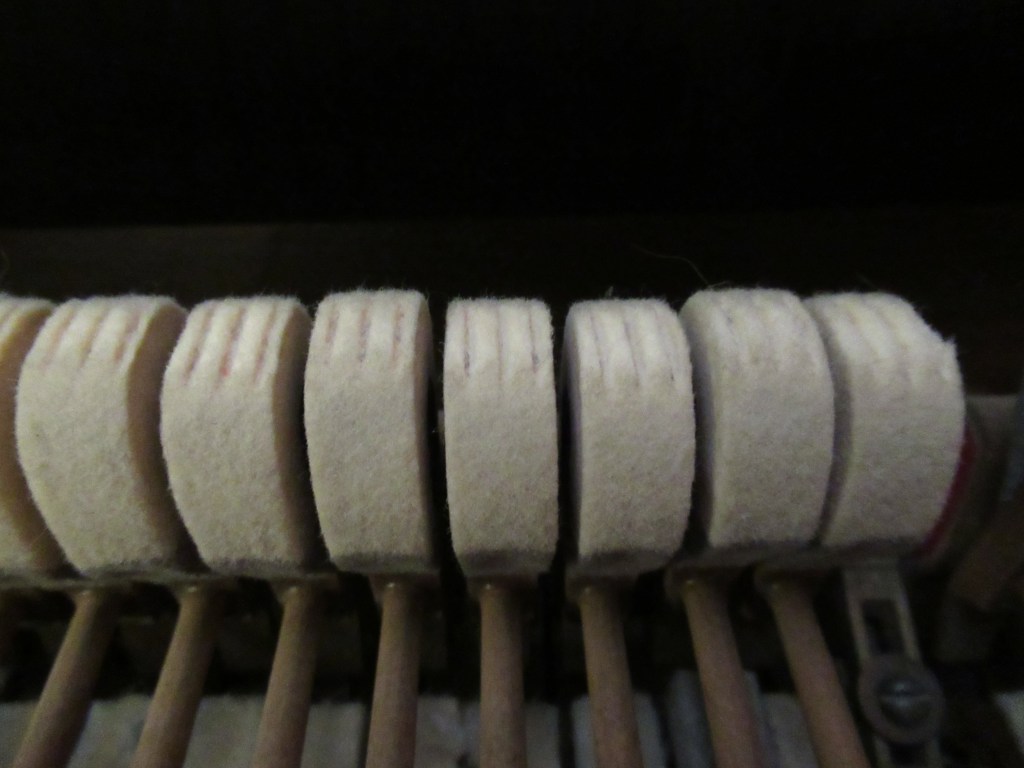
Voicing adjusts the tone of each note of the piano. This is done primarily by working on the hammers, although there are additional factors that contribute to piano tone. Piano hammers are made of felt, which can become compacted from frequent playing. This compaction eventually causes the tone of the piano to become less warm and balanced, and instead more bright (i.e. “tinny”), attack-heavy (i.e. “plunky”), irregular, and inconsistent. If a few notes on a piano have a particularly harsh sound, this can often be touched up during a tuning appointment for no extra charge. A basic voicing of all the hammers, however, typically requires two hours of extra labor. How often a piano requires voicing work depends on the frequency of its use and the tastes of the customer. One sign that a piano may require voicing is that deep grooves have formed on the hammers:
Regulation:
Regulation adjusts the way each note of the piano responds to touch. This is done through several mechanical adjustments to the action of the the piano. Customers may prefer a light or a heavy touch, but in either case the goal is a consistent touch across the piano which allows the pianist to play both softly and loudly. During a tuning appointment, some small adjustments are typically made at no extra charge so that, at a bare minimum, each note is playable. However, a basic regulation of the entire action, including a deep cleaning, lubrication, and a sequence of adjustments to each note, requires several hours of extra labor. The labor cost to bring a piano to its full potential will vary, but an estimate can be provided for free during a tuning appointment.
 Tuna Valley Piano Service
Leave a comment